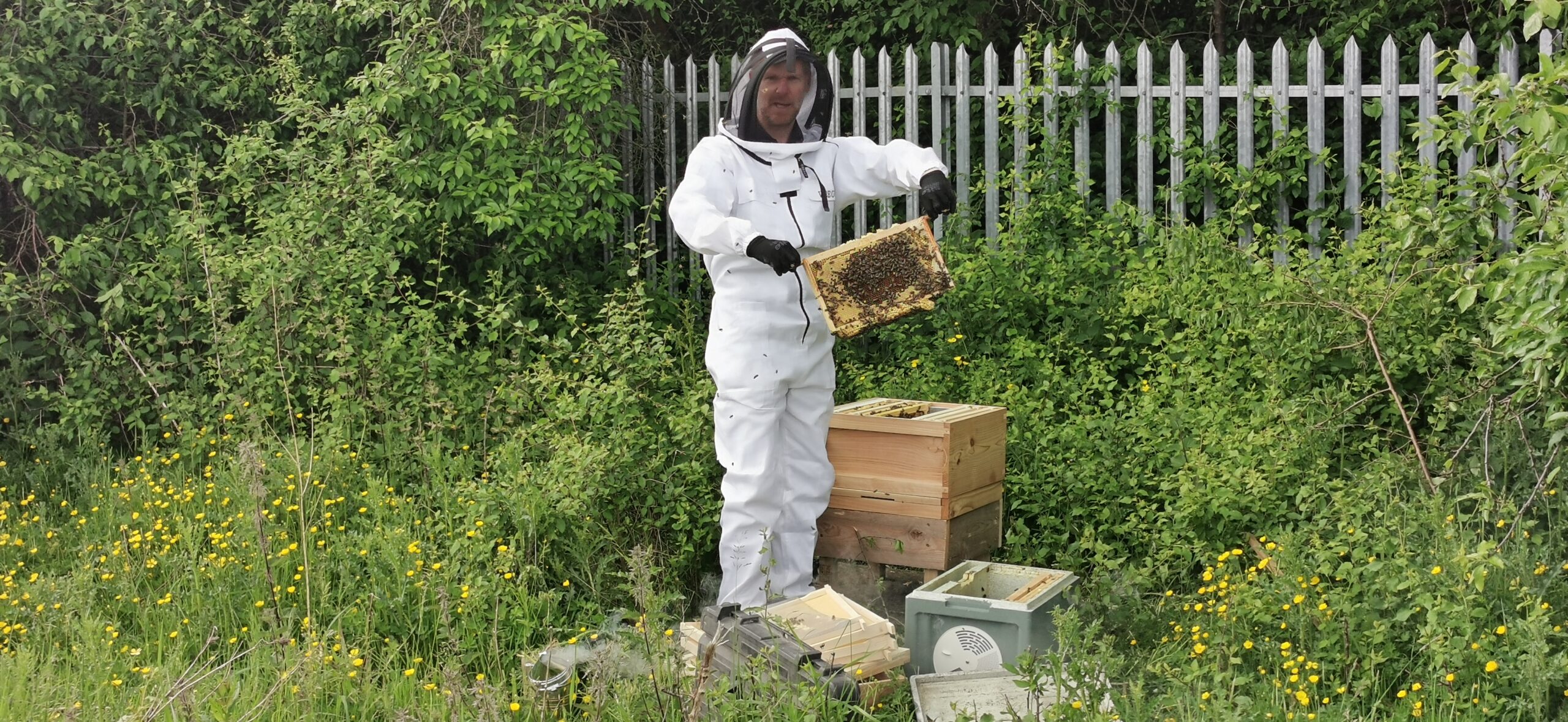
Bee colonies have been introduced at Ravenscraig’s new 13-acre sustainable woodland as part of ongoing efforts to enhance biodiversity across one of Europe’s largest brownfield regeneration projects.
Installed in partnership with Sustainable Woodland Company, the hives will establish healthy pollinator populations, supporting wildflowers, trees and other native plant species while strengthening the site’s long-term environmental ambitions.
The woodland forms part of Ravenscraig Limited’s wider commitment to creating a sustainable community where development sits alongside thriving natural habitats. Across the site, biodiversity measures already include the protection of Ancient Woodland, newt ponds, butterfly mounds and plover nesting areas, with the arrival of the new hives marking the latest step in that programme.
The initiative builds on the woodland planting project completed last year by Sustainable Woodland Company, which saw more than 3,200 native trees planted to create a new habitat that will continue to develop and support local wildlife for generations to come.
Scott McDermott, Director at Sustainable Woodland Company, said: “Establishing these bee colonies is an exciting milestone for our woodland at Ravenscraig. Pollinators play a vital role in healthy ecosystems and these hives will help strengthen biodiversity as the woodland continues to establish itself. It’s rewarding to see the project evolve from planting trees to creating a habitat that will support wildlife for years to come.”
Russell Wilkie, Director at Ravenscraig Limited, said: “Creating a thriving, self-sufficient community means investing not only in homes, employment and infrastructure, but also in the natural environment. The introduction of these bee colonies demonstrates our continued commitment to enhancing biodiversity across Ravenscraig, ensuring our green spaces provide lasting benefits for wildlife, residents and future generations alike.”
The new woodland forms part of the wider Ravenscraig masterplan. Alongside new homes, employment opportunities, education and leisure facilities, extensive green spaces and active travel routes are helping create a healthier, more sustainable community for the future.